01 — About Vinnie

Vinnie
Van Wyk

Personal trainer, corrective exercise specialist, and chef. In practice since 2003. Based in New York City.

NASM-CPT NASM-CES CrossFit L1 In practice since 2003 New York City
02 — Background
In practice
Since 2003. Training clients in gyms, at client homes, and online across more than two decades.
Credentials
NASM Certified Personal Trainer, NASM Corrective Exercise Specialist, CrossFit Level 1.
Location
New York City.
Culinary
Trained chef. Coaching includes teaching clients to prepare the meals on their plan, not just follow a document.
Fasting
Practices extended fasts of 7–10 days quarterly and daily intermittent fasting. Works with clients who want to incorporate fasting safely.
Approach
Non-biased. Assessment-first. What is healthy for you may not be healthy for someone else. No universal protocols applied without data to support them.
03 — The story

Where this started

Vinnie Van Wyk has been on a gym floor as a trainer since 2003. What brought him there was not a straight line. Growing up, he dealt with health problems that sent him looking for answers beyond conventional advice. That search pulled him toward alternative medicine, toward nutrition science, toward understanding what the body is actually doing rather than what a general protocol says it should do.

The culinary work came in parallel, not after. He trained as a chef because he saw the same gap his clients ran into: a meal plan is only as useful as the person's ability to execute it. Handing someone a PDF and expecting results is optimistic. Teaching them what a chef knows about flavor, technique, and preparation is something else. The cooking and the training became one practice.

The nutritional research deepened when he lost people close to him to cancer. That loss sent him into the literature on metabolic approaches to disease, on the relationship between diet, inflammation, and cellular health. What he found convinced him that the nutritional component of his work was not just about body composition. He has been compiling that research into resources for clients and the public ever since.

His fasting practice grew out of the same curiosity. He has done multiple extended fasts of 7 to 10 days, on top of daily intermittent fasting, not as performance or spectacle, but to understand from the inside what he is asking clients to consider. The result is that he can teach people how to fast in a way that is specific, safe, and grounded in what he has actually experienced.

More than two decades later, he works in New York City. The work is the same as it was at the start, just better calibrated: assess first, build the program from what the assessment shows, and teach the client to understand why every piece is there.
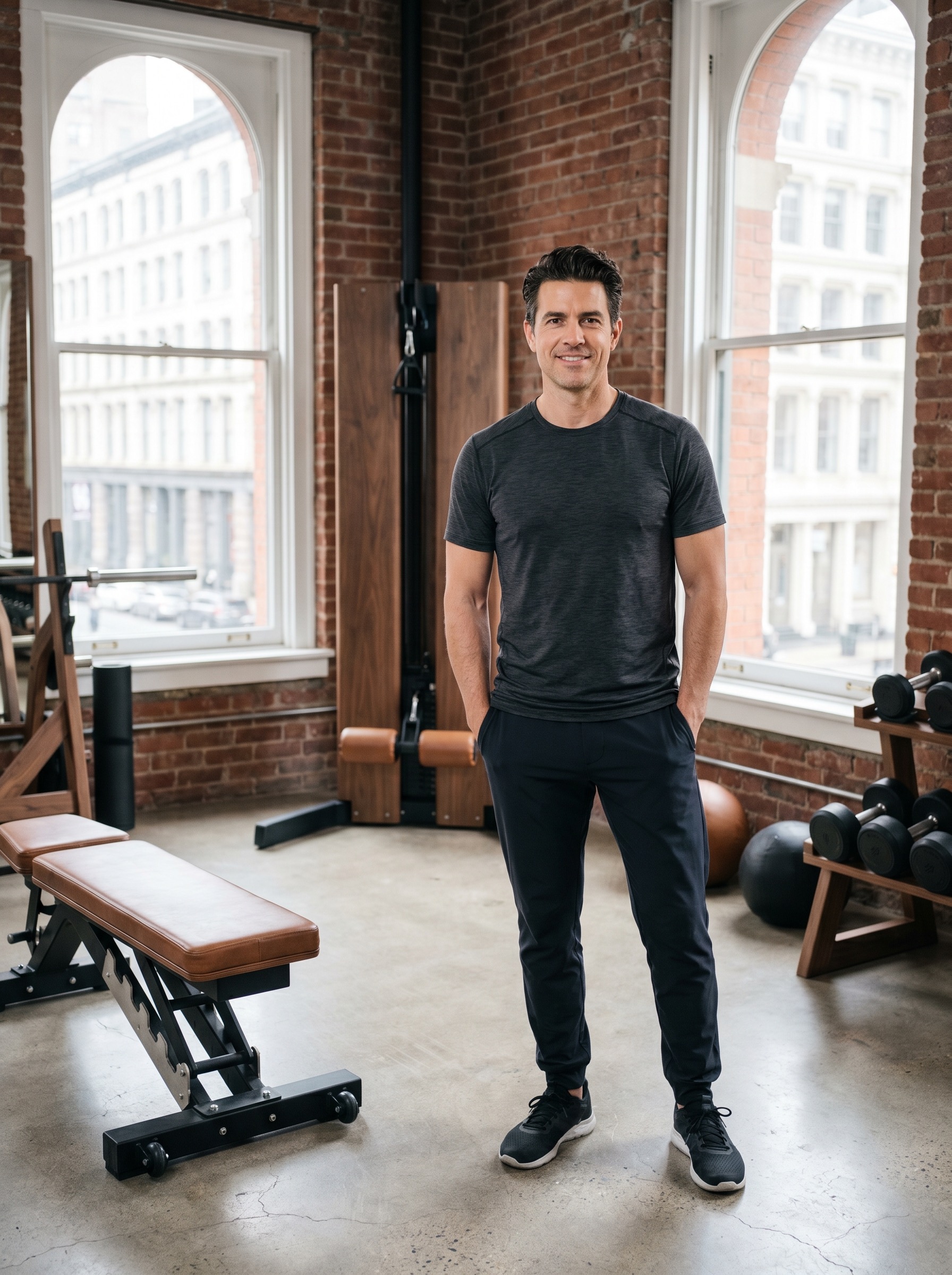
04 — What he believes

On training, nutrition, and the long game

01

The assessment is not the beginning of the program. It is the program.

Every movement pattern, body composition number, and mobility finding shapes what comes next. Skipping the assessment to get to the training is skipping the work.

02

What is healthy for you may not be healthy for someone else.

Age, genetics, training history, and goals all factor into the equation. No universal protocol survives contact with an individual. The plan has to fit the person.

03

Nutrition is the hardest part of the equation. Most people treat it as the afterthought.

Teaching clients to cook their own meals, rather than follow a plan someone else prepared, is one of the highest-leverage things a trainer can do for long-term results.

04

Corrective exercise is injury prevention, not rehab.

Addressing muscle imbalances before they cause problems is a different discipline from fixing them after. The NASM-CES work runs through every program from day one.

05

You need to understand why, not just what to do.

Clients who understand the principles behind their program train better between sessions, make better decisions when things go off-script, and stay in better shape over years rather than months.

06

The research never stops.

Over two decades, the tools have changed and the evidence base has grown. The willingness to keep testing ideas, including on himself, is what keeps the work honest.

05 — Who this is for

The clients who get the most from this work

The approach is not for everyone, and that is intentional. The work is detailed, the assessments are thorough, and the expectation is that clients engage with the process rather than hand it off. The people who do well here tend to share a few things.

They want to understand

Not just follow instructions, but know why each piece is in the program. Curiosity makes the work go faster.

They have tried other approaches

Generic programs, group classes, apps. None of it stuck long-term. They are ready for something built specifically for them.

They are dealing with a specific problem

A chronic imbalance, a body composition goal that has been resistant, a health condition they want to manage through training and nutrition.

They are in it for the long term

The goal is not a peak. It is sustained capacity, health, and function across decades. That requires a different kind of plan.

06 — The anchor
"My approach is non-biased. What is healthy for you may not be healthy for someone else. The assessment is not the beginning of the program. It is the program."
Vinnie Van Wyk, NASM-CPT, NASM-CES
07 — Next step

Read the methodology, or get in touch directly.

The methodology page covers the five pillars, what a first session looks like, and the evidence behind the approach.

Read the methodology Get in touch